

Does Linen Need to Be Organic?
“Organic” is one of the most talked-about labels in textiles. It sounds reassuring, and for many materials, it plays an important role. But when it comes to linen, it’s worth stepping back and asking a simpler question:
Does linen actually need to be organic to be safe, sustainable, and high quality?
In most cases, the answer is no.
Linen is made from flax, a plant that behaves very differently from crops like cotton. Flax thrives in the mild, rainy climate of Northern Europe—particularly in France and Belgium—where it grows naturally with little intervention. It doesn’t require irrigation, and it typically needs far fewer pesticides or fertilizers than other textile crops. In this environment, flax is already a low-impact material by nature.
If you’re curious how that translates into the fabric itself, we go deeper into the sourcing and production process in our guide to how linen is made.
Because of this, the word “organic” doesn’t carry quite the same weight for linen as it does for other fabrics. Instead, what matters more is where the flax is grown, how it’s processed, and what ends up in the final fabric.
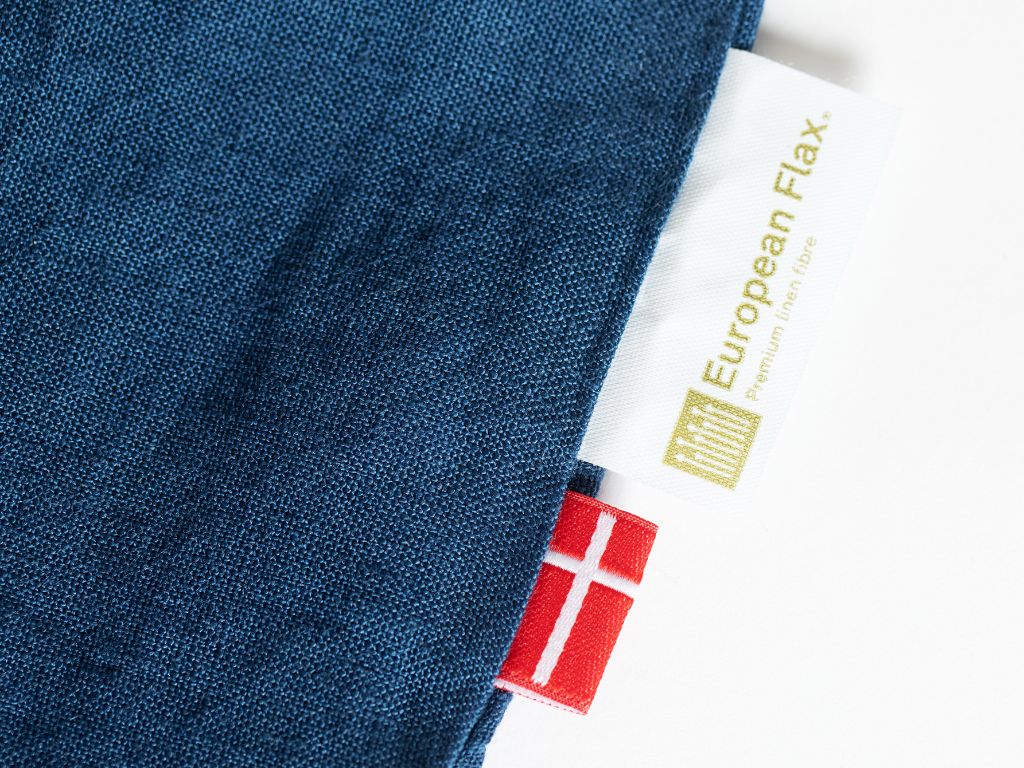
One of the most meaningful indicators of quality and sustainability in linen is its origin. Certifications like European Flax and Masters of Linen trace the fiber back to Western Europe, where flax has been cultivated for generations under strict environmental standards. These certifications ensure the flax is grown without artificial irrigation, is non-GMO, and can be traced from the field all the way to the finished textile. They reflect a system that is both deeply rooted and carefully controlled.
This is the same region where we source the flax for our European linen bedding collection, where the focus is on high-quality European fiber rather than relying on a single label.
Equally important is what happens after the flax is harvested. This is where OEKO-TEX® comes in. Rather than focusing on how the plant is grown, OEKO-TEX looks at the finished fabric and tests it for harmful substances. That includes everything from dyes to chemical residues that could come into contact with your skin. For something like bedding—where you spend hours each night—this level of testing matters.
We talk more about what goes into creating a safe, skin-friendly fabric in our article on whether linen is toxin free.
It’s easy to assume that “organic” is the highest standard, but it’s really just one piece of the picture. Organic certification focuses on farming practices at the raw fiber level. OEKO-TEX, on the other hand, ensures that the fabric you actually use is safe. And with linen, especially linen grown in its natural European environment, many of the concerns that organic standards are designed to address are already minimized from the start.
So does linen need to be organic? Not necessarily.
What matters more is that the flax is grown in the right place, under the right conditions, and that the finished fabric has been tested for safety. When those pieces are in place, you’re left with linen that is not only naturally sustainable, but also clean, traceable, and safe to live with.
If you’re exploring options, you can see how this comes together in our European linen sheet sets, which are made from European flax and finished to meet OEKO-TEX® standards.
In the end, it’s less about chasing a single label and more about understanding the full story behind the fabric.
Read more

Make your bedroom cozier with a hygge duvet! Find out what makes a duvet hygge and see how it can elevate your bedroom aesthetic and enhance your sleep.
Read more
What Type of Linen is Best for Bedding?
All linen is most certainly not created equal—find out which type reigns supreme when it comes to ultra-soft, durable bedding.
Read more

Leave a comment
This site is protected by hCaptcha and the hCaptcha Privacy Policy and Terms of Service apply.