

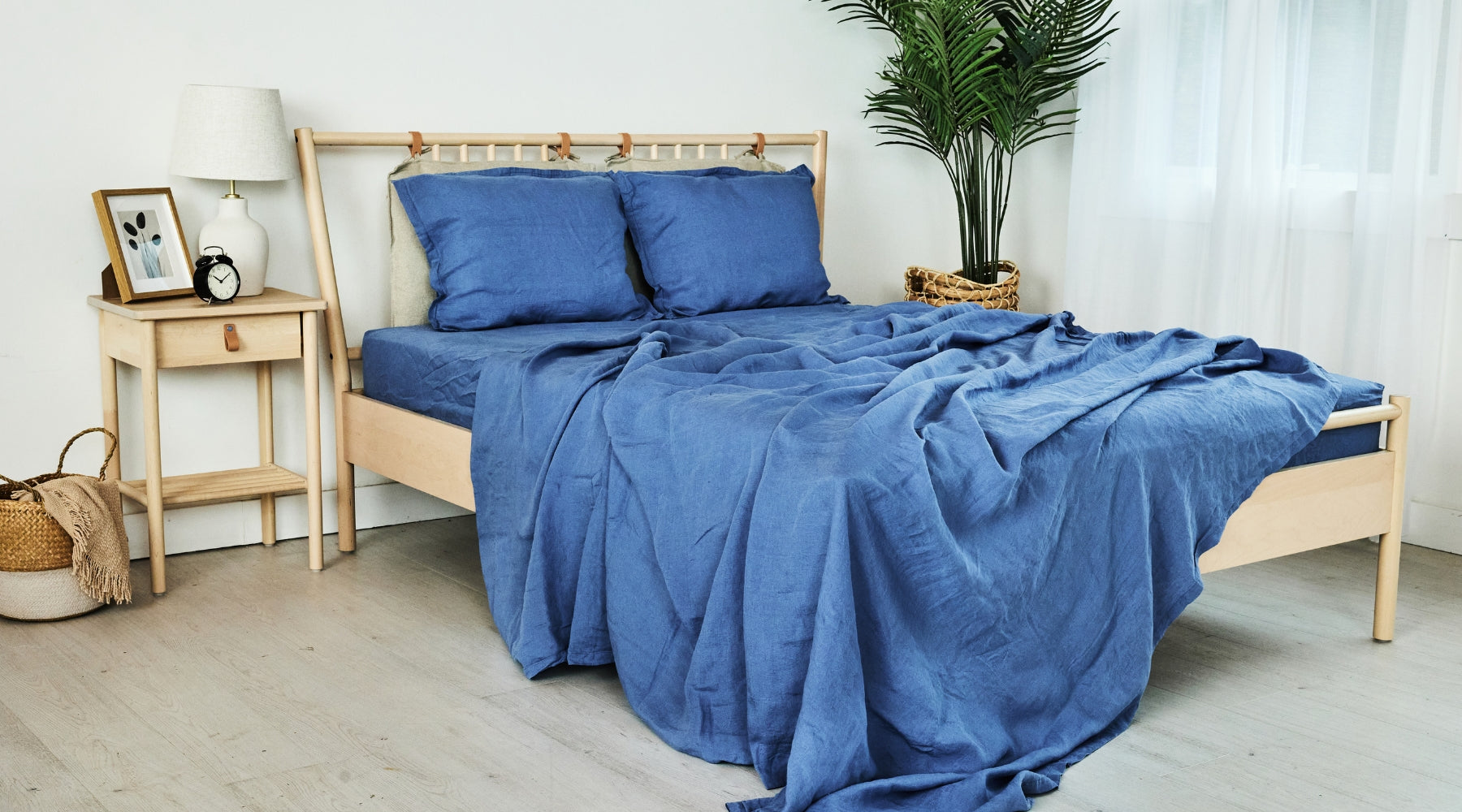
How to Care for Linen Bedding
Discover simple care habits that help maintain the quality, comfort, and longevity of your linen bedding.
How Often Should I Wash Linen Bed Sheets?
Many blogs recommend washing your bedding once a week for hygiene. But for many people, and especially with European linen bedding, that’s simply not necessary. Plus, too-frequent washing is bad for both the environment and your wallet.
How often you need to wash your sheets depends on how you use them. If your pets sleep with you and you regularly spend most of the weekend eating pastries in bed, then yes – you’ll probably need to wash your bedding at least once a week. But if you always wear pajamas, wash your face before bed and never use your bed for anything but sleeping, you can likely stretch it to every two weeks or even longer.
How to Make Your Own Bed Sheet Spray
Between washes, you can refresh your sheets with a calming essential oil spray, which may also help you sleep at night. British herbal tea brand Pukka has a recipe on its website: 40ml water, 40 ml vodka, 20 drops of lavender oil and 20 drops of chamomile oil. Although sleep sprays are loved by many of us humans, be aware that essential oils can be harmful to some animals.

How to Wash Linen Bedding
European linen famously becomes softer with each wash. This is because flax, the plant from which linen is made, contains a compound called pectin. Over the life cycle of the flax plant, pectin binds the plant’s cells together, making it strong and tough. After harvesting, processing, and production, residual pectin on the linen fabric can make it feel stiff and scratchy.
Pectin is soluble in water, however, so washing removes it, causing the fabric to become soft. At The Modern Dane, we’ve started this process for you, garment-washing our soft linen sheets with enzymes to ensure that they’re beautifully smooth and comfortable from the very first use.
Linen is very low-maintenance; most linen care mistakes involve the overuse of heat and laundry products, rather than underuse. Wash linen on cold, or at 30°C max, to keep colors vibrant and avoid damaging the fibers. Use a moderate spin cycle for fewer wrinkles.
The Best Detergents for Linen Bedding
The best laundry detergent for linen sheets is one that is free from harmful chemicals and optical brighteners, as these can weaken linen fibers over time. Choose an eco-friendly detergent with a neutral pH, such as Ecos, Molly’s Suds, The Laundress Signature Detergent, and Seventh Generation Free & Clear.

Should I Use Bleach or Softeners on Linen Bedding?
Avoid using bleach or any whitening agents on linen bedding, as it will fade the colors. With pure white linen, use oxygenated bleach rather than chlorine-based bleach, which can have a yellowing effect.
One of the most valuable properties of European flax are the pores that run along the length of the stem: these are what make finished linen sheets breathable and moisture-wicking. They’re also why you shouldn’t use fabric softener with linen: it blocks these pores, compromising linen’s natural properties.
To achieve softening without the damage, use a small amount of white vinegar in the fabric softener drawer—this will also help to remove odors. Your sheets will have a slight vinegar smell while still wet but this will disappear once they are dry.
How to Dry Linen Bedding
As with all fabrics, natural air drying is the best method for preserving the softness and longevity of your linen sheets. If you can, hang them outside in the shade to avoid UV damage from the sun.
If you’re in a rush, however, you can put your linen sheets in the dryer on a low setting. Take them out just before they’re done, and finish with a brief spell of air drying. This will minimize wrinkles—plus, overdrying can weaken linen fibers.

How to Iron Linen Bedding
We don’t think linen bedding needs ironing; wrinkles are a part of the cozy, casual look that makes linen so charming. If you’re a fan of the fresh-pressed look, though, you can iron your linen bedding to get the creases out. For ease (and to preserve the designs), we recommend that you iron your bedding on the reverse side while it’s still damp, on low-to-medium heat. You can also gently steam your linen bedding; just don’t let it hover for too long on one spot.
How to Store Linen Bedding
Between uses, your European linen bedding should be stored in a cool, dark place, away from direct sunlight. Avoid airtight bags or plastic boxes, which will encourage mold and mustiness. A container which allows for some airflow, with slats or holes, is ideal.
How to Get Linen Professionally Cleaned
Of course, you can also get your linen sheets professionally cleaned. Just make sure that your cleaner is a linen specialist, and enquire ahead of time whether they use chemical softeners, bleaches, or any other potentially harmful chemicals.

Why Two or More Sets is Best
It’s best to have at least two sets of bedding to rotate between, rather than having just one that you put straight back on the bed after washing. While rotating your bedding won’t magically double its lifespan, it can help reduce wear and spread use more evenly over time.
Another benefit is that it makes laundry day less rushed. If you’re in a hurry to get your linen washed, dried, and back on the bed by the end of the day, this can force you to cut corners in ways that shorten its lifespan. With just one set, you might use a faster spin cycle, tumble-dry on high heat, or throw it back on the bed while still damp. Therefore, we recommend having more than one set of duvet covers, which will also give you the opportunity to admire more than one beautiful, Scandinavian-inspired design.
Are you for or against wrinkles on linen bedding? What are your linen care tips? Let us know on Instagram, Pinterest, Facebook or Twitter!
Read more

The Scandinavian Evening Ritual (and How it Will Improve Your Sleep)
Wind down from a busy day, Scandi-style. Discover the elements of a Scandinavian evening ritual and how they set the stage for a restful night’s sleep.
Read more
Why Danish Design Never Goes Out of Style
Discover why Danish design never goes out of style and how its timeless principles of simplicity, quality, and functionality keep it forever in fashion.
Read more

Leave a comment
This site is protected by hCaptcha and the hCaptcha Privacy Policy and Terms of Service apply.