

Article: The Case for Staying In: A Home That Helps You Unwind
The Case for Staying In: A Home That Helps You Unwind
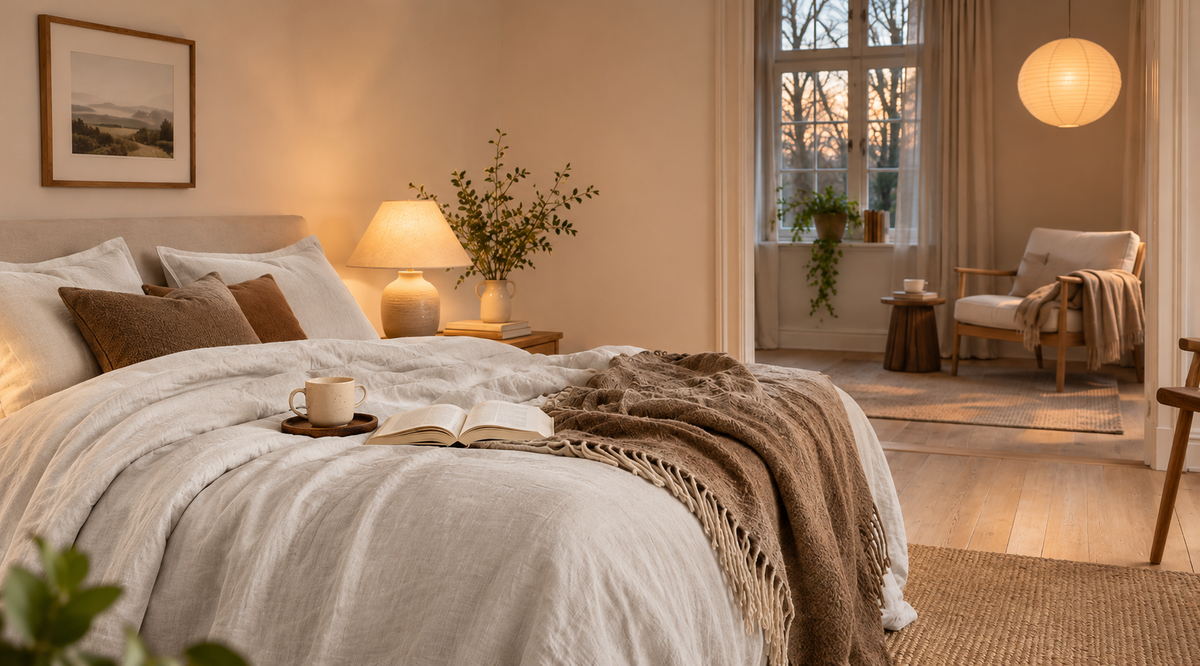
As the days grow shorter, the world seems to ask more of home. Lamps come on before dinner. Plans that sounded appealing at noon can feel surprisingly ambitious by six, especially when the sofa is nearby and the weather has begun making its own persuasive argument.
Staying in is sometimes described as though nothing happened. Yet an ordinary evening at home can restore us: a simple meal, a book left open, clean sheets, a conversation allowed to wander. These hours rarely become stories we retell, but they shape the way life feels.
A home that supports those evenings does not need to be perfectly styled or newly decorated. It needs to be comfortable, easy to use and true to the people living there. Scandinavian design offers a useful measure: does the room help with the life happening inside it? A well-placed lamp or somewhere to set down a cup can matter more than a room full of new things.
Staying in deserves more respect
There are evenings for restaurants, concerts and tables crowded with friends. There are also evenings when the loveliest plan is the absence of one. Both belong in a full life. Choosing to stay home can create the breathing room to notice how you are feeling, follow a quieter appetite and let the day end without one more transition.
In Denmark, hygge gives language to comfort and togetherness, though it is often reduced to candles and knitted socks. The deeper pleasure comes from creating conditions in which people can relax and be present. Our guide to hygge at home explores that balance of warmth and function in the bedroom. The same principle applies throughout the home: make comfort natural rather than ceremonial. That ease is the point.
Design for the life you actually live
Before rearranging a room or buying anything, notice where an ordinary evening feels harder than it should. Is there nowhere comfortable to read? Does the best chair double as a laundry shelf? Are the only lights overhead? Start with the habits you already have, not the image of a perfect home.
Perhaps every lamp is bright enough for minor surgery, or the bedroom chair is expected to hold both a person and the week's wardrobe. That is an unfair assignment for any chair. Clearing one surface, moving a lamp or adding a basket where blankets gather may do more than another decorative object.
Good Scandinavian design allows usefulness and beauty to support each other. A room is successful when daily life feels easier in it. For the bedroom, our guide to styling a bed like a Danish home takes the same relaxed, practical approach.

Let the room change with the light
Lighting may be the quickest way to signal that the active part of the day is ending. Overhead light is useful for finding an earring or dealing with a spill. For the evening, smaller pools of light feel gentler: a table lamp beside the sofa, a reading light near the bed, a warm glow in the hallway.
Try turning on only the lights needed for the way the room is being used. The darker edges create depth, while warmer bulbs soften hard surfaces and make natural materials feel richer. A candle can add movement and atmosphere, but it does not have to carry the entire concept of coziness on its small wax shoulders.
Curtains and blinds also help mark the shift. Drawing them at dusk makes the room feel held, particularly in winter when windows can become black mirrors. In the morning, opening them fully reverses the signal and welcomes daylight back in. This simple rhythm lets the same space feel alert by day and sheltered at night.

Make comfort easy to reach
Comfort works best when it is already where you need it. Keep a throw within reach rather than folded somewhere admirable but inconvenient. Give your book a home near your favorite chair. Put water beside the bed before you become too comfortable to move. These are small accommodations to real life, not finishing touches for a photograph.
Texture helps a room feel warmer without making it feel busy. Linen, wool, wood and paper each bring a quiet variation to the surfaces around us. Their character comes from weave, grain and slight irregularity, so a restrained palette can still feel layered. A smooth ceramic cup beside crumpled linen, or a wool throw over a wooden bench, gives the eye enough to enjoy without asking for attention.
The room need not contain less of everything. It simply needs fewer obstacles between you and the things you enjoy doing there.
Give the bedroom a gentle landing
A calmer evening begins before you enter the bedroom. Lowering the lights, putting away the last cup and leaving work where it belongs reduce the sense that the day is following you down the hall. The bedroom should feel like the next natural step rather than a final task.
Start with the bed. Straighten the duvet, arrange the pillows as you actually use them and let linen retain its relaxed texture. Soft, garment-washed linen duvet covers can add natural texture without requiring elaborate styling; the aim is a bed that feels inviting, not untouchable.
Clear the route around it and give the day's clothes a proper destination. If a phone charges in the room, place it beyond easy reach or turn the screen away. Keep the things that support rest nearby—a lamp, a book, water, perhaps a notebook for the thought that otherwise insists on being remembered at 2 a.m.
A bedroom that is easy to reset is easier to return to. Make space for the everyday things—a lamp, a book, water and a place for clothes—rather than adding objects that need their own maintenance.

Keep one small evening ritual
A ritual creates a bridge between the day and sleep. It might be tea after dinner, a warm shower, ten pages of a novel or a record played from beginning to end. The activity matters less than the repetition. Over time, it becomes a familiar cue that the pace can change.
Choose something small enough to survive a busy week. A routine requiring twelve steps and specialized equipment may resemble a second job. One dependable gesture is often enough: dim the lamps, fold back the bed or place tomorrow's clothes on a hook.
If you would like to build a little more rhythm into the final hour of the day, the Scandinavian evening ritual offers simple ways to move toward rest without turning relaxation into a performance.
Try a ten-minute evening reset
The most useful changes do not require a redesign. Try giving your home ten minutes before settling in: switch off the bright overhead lights and turn on a reading lamp; clear the surface where you want to put a book or cup; straighten the duvet; and place tomorrow’s essentials where you will find them. Choose only what makes the evening noticeably easier.
If the room is shared, consider what comfort means for everyone using it. One person may want a reading light while another is ready for darkness. A throw close to the sofa, a quiet corner for a book or a clear bedside surface can make room for different ways of unwinding without requiring everything to match.
Then stop. There may still be a half-finished puzzle, a child’s book under the sofa or laundry waiting until morning. A lived-in home is not a failed design project. The point is to remove the small irritations that demand attention and keep the warmth, texture and signs of life that make the place yours.
The case for staying in is ultimately a case for paying attention to ordinary life. When rooms work with our habits rather than against them, an evening at home can feel complete on its own: a simple meal, a conversation, a book, or very little at all. As the evenings grow longer, a home that asks less of us may be all we need.
Read more
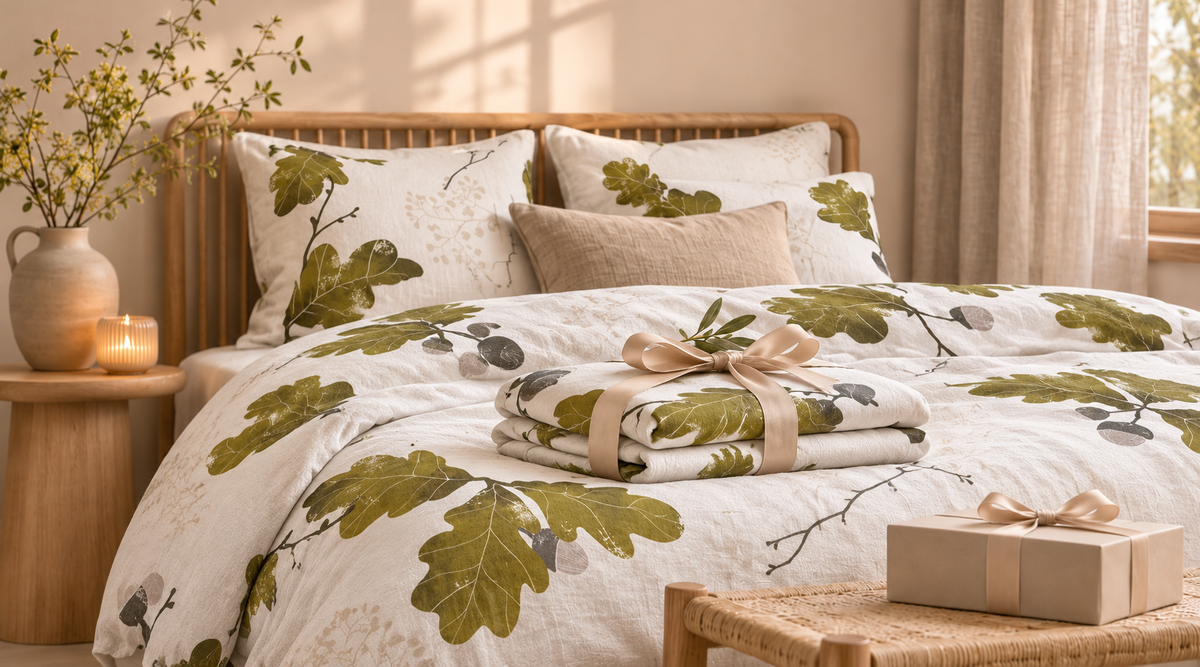
How to Choose Bedding as a Gift
Find a bedding gift that suits their bed, style, sleep and values, from linen pillowcases and sheets to swatches and gift cards.
Read more

Leave a comment
This site is protected by hCaptcha and the hCaptcha Privacy Policy and Terms of Service apply.